
Marcus Adams, Joshua D. Smith, Neal D. Gray
Each year TPC presents an interview with an influential figure in counseling as part of its Lifetime Achievement in Counseling series. This year, Dr. Christian J. Dean discussed important considerations for military-connected individuals and families. With a military career spanning nearly three decades and a counseling career almost as long, Dr. Dean holds valuable insights into military culture, mental health needs of military-connected individuals, and challenges faced by counselors seeking to serve this population. In this interview he clearly identifies gaps in services and potential solutions that are informed by his lived experience and professional expertise. We are grateful for Dr. Dean’s commitment to veterans, active-duty military personnel, and their families and share his hope for expanded military mental health services.
—J. Richelle Joe, Editor
Disclaimer: The following does not represent the views or opinions of the Department of Defense, the Department of Veterans Affairs, the United States Army, the United States Army Reserve, or any other branch or component of the U.S. Armed Forces.
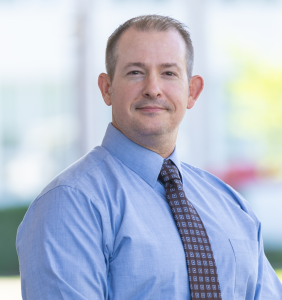 Christian J. Dean, PhD, NCC, LPC-S, LMFT-S, is a professor in the Clinical Mental Health Counseling program at Divine Mercy University. He was previously a professor at the University of the Cumberlands. He is licensed as a professional counselor/board-approved supervisor (LPC-S) and a marriage and family therapist/board-approved supervisor (LMFT-S) in Louisiana, where he practices at Counseling for Growth, LLC. Dr. Dean is a 28+-year member of the military (Army National Guard and Army Reserve), currently holds the rank of colonel, and is a veteran of Operation Iraqi Freedom. He is a National Certified Counselor (NCC) and participated as a collaborative investigator for the DSM-5 Field Trials in Routine Clinical Practice Settings. He works with Spanish-speaking clients, service members, veterans, and a wide variety of other client populations. Dr. Dean is an EMDR-trained therapist and integrates cognitive behavioral therapy in his clinical work. Dr. Dean has presented and published on the use of metaphors in counseling and counselor education, counseling couples, understanding military systems and dynamics, differential diagnosing and processes, and ethical considerations in counseling and marriage and family therapy. He is the author of Ladders and Shovels: How to Climb Out of Emotional Holes and Stop Digging Them and the coeditor of Metaphors in Counselor Education and Supervision as well as Metaphors and Therapy: Enhancing Clinical Supervision and Education.
- What originally inspired you to become a counselor, and how did your time in the military shape your desire to serve veterans, active-duty members, and their families?
I’m a rescuer by nature, which can be a good and, at times, challenging trait. Whenever my friends had something on their mind, I would want to be available to them to discuss what was bothering them. Back in high school, what normally came up as upsetting events was usually relationship troubles, and I found that I wanted to be there for my friends to hear them out, be a listening and compassionate ear, and to figure out how I could be helpful. My passion for helping others led me to major in psychology at the University of New Orleans.
When I enlisted in the Louisiana Army National Guard, I was already familiar with many military terms and some cultural factors, as I was in the Navy Junior Reserve Officers Training Corps (NJROTC) in high school. I completed Basic Training and my Advanced Individual Training (AIT), where I was military occupational specialty (MOS) qualified as a 13F, fire support specialist. I began working on my graduate degree in counseling at the University of New Orleans and enrolled in Officer Candidate School, where I commissioned as a second lieutenant. I graduated with my master’s in counseling, completed Field Artillery Officer Basic Course (FAOBC), and continued to serve in the Louisiana Army National Guard while I enrolled in my doctoral program in counselor education and supervision at the University of New Orleans. While completing my dissertation, I was alerted that my unit was being mobilized to deploy to Iraq as part of Operation Iraqi Freedom III. I was allowed to stay behind a couple of days so that I could walk for graduation and then immediately reported to Fort Hood, Texas, to join my unit.
At that time, I had already received my license as a marriage and family therapist (LMFT) and was what was then called a counselor intern, also completing my hours toward my license as a professional counselor (LPC); however, I had not had much work in providing counseling with service members or veterans. Upon our deployment, I realized that the medical unit in my brigade did not have any mental health assets, so I connected with the brigade surgeon and advocated for the importance of mental health services to our soldiers. Since I had my doctorate and an independent license, I was allowed to provide counseling services to our soldiers for one day a week at the Troop Medical Clinic (TMC) with oversight from the brigade surgeon. I had a 12-hour day, and all 12 hours were filled before I even started. Additionally, the next week’s clinical day was also full before I even finished my first day. This prompted unit leadership to allocate two days a week, which were also quickly filled. Before I knew it, I was assigned to provide counseling services 6 days a week at 12-hour days, which were all filled almost every week while I served in that capacity.
My time working at the TMC was very rewarding for me, as I could help soldiers in need during their time in a combat deployment. I was able to hear many stories and see the need for mental health resources for service members. I also provided training to unit leadership and medics, and even units outside of our brigade requested training. However, all of that came to an end when a new division assumed operational control over our brigade during a transfer of authority. The incoming unit had a division psychologist, who said that I could not provide counseling, as I was not a psychologist or social worker, the two professions that the U.S. Army allowed to provide counseling services. My brigade now had to find other ways to get mental health services to our soldiers. From then on, I made it part of my mission to continue to provide counseling services and help others be more informed when helping service members, veterans, and their families.
- Who mentored you along the way, and how does this impact how you mentor others today?
Mentorship is something I’ve always valued and continue to value. In terms of mentorship in counseling, I would have to say it goes all the way back to my graduate counseling program. Dr. Ted Remley, Dr. Diana Hulse, Dr. Terry Christensen, and Dr. Barbara Herlihy, to name a few, were some mentors who poured into me and informed who I am as a counselor. On a clinical level, I had the opportunity to work with several clinicians in many capacities who have helped mentor and develop my clinical skills. On the military side, I’ve had many officers and many noncommissioned officers (NCOs) throughout my career who provided some form of mentorship.
Today, I am working on being available to counselors and service members for mentorship. Sometimes mentorship occurs in structured settings, while other times it develops more naturally through conversations and day-to-day interactions. These mentoring moments often happen during phone calls with other soldiers or impromptu meetings during Battle Assembly (BA)/drill. During BA, I’ll have soldiers come up and ask if they could meet with me. Often, there are questions related to career progression, options within the U.S. Army Reserve, and whether to continue to serve. More structured mentorship may include formal developmental counseling within the military leadership context, where assigned tasks, expectations, performance, and professional development goals are discussed with soldiers. Regular touchpoints may also be used to explore goals, thoughts, and concerns. In the counseling world, mentorship may involve touching base with counselors who email or call regarding private practice, joining the U.S. Armed Forces, research questions, etc. I also have monthly meetings with counselors who request more ongoing mentorship and guidance.
- From your perspective, what are some of the biggest mental health challenges that service members, veterans, and military spouses are facing today?
The culture of the military is one of the biggest challenges. Although mental health services and the overall mental health care of service members, veterans, and their families have gained more attention over the past decade, there is still a lot of work to do. Different branches of the military have their own challenges with their view and approach to mental health, where some may be more understanding and supportive, while there is still a significant stigma with others. Many [individuals] are concerned about how they will be treated or seen by their fellow service members if they admit to or get help for mental health–related concerns. Again, there has been some improvement, but we can still grow a lot in this area.
Some solutions with mental health services include adjusting the types of free services provided through Military OneSource. For example, anyone diagnosed or who meets criteria for a diagnosis of most psychiatric disorders is not allowed to use such services, as Military OneSource only provides “nonmedical” counseling. Therefore, having such services available to service members and their families regardless of clinical conditions would prove to be helpful and expand the free services to those who need them the most. Additional support services such as Military and Family Life Counselors (MFLC) and Military OneSource can be helpful resources; however, limitations related to clinical conditions and affordability can still create barriers to care for many service members and their families. Access to care also continues to be a challenge, particularly for service members and families attempting to navigate systems such as TRICARE, Military OneSource, and VA-related services. Increasing the number of counselors who are educated about and willing to work within these systems could greatly improve access to mental health support for military populations.
The [Department of] Veterans Affairs (VA) and related VA clinics and Vet Centers do provide mental health services to veterans who are registered with the VA. These services are more available to veterans throughout the country. The VA also does provide some community-based care options where they contract with local providers to help meet the needs of veterans. However, getting enrolled in and navigating through the VA system can be challenging. Counselors can learn about ways to assist veterans in enrolling with the VA and to provide additional support when needed.
If a service member records a mental health diagnosis during a Periodic Health Assessment (PHA), then the service member’s records may be reviewed for Fit-for-Duty evaluations, which may impact their ability to serve in certain specialties and/or their duty status. Even on the application for security clearances, there are questions about treatment; however, marriage and couples counseling are excluded from the areas that may need to be reported. Still, military leadership encourages service members to be honest about their experiences so that adequate services may be provided through referrals and organic assets.
- What do you believe are some of the most common misconceptions civilian counselors have about working with service members, veterans, and military families, and how can the profession better prepare clinicians to serve this community effectively?
Whether it be a misconception or lack of awareness, the first thing that comes to mind is the importance many service members and veterans place on military service and culture. A counselor knowing their own family’s military history can help demonstrate that they honor and respect service members and veterans. Understanding the culture, values, structure, and terminology of at least one military branch can be helpful, and broader knowledge across branches can be even more beneficial.
Another misconception is that all service members and veterans are closed off and not open to counseling. There are many within the military community who embrace counseling. Part of the challenge is helping military populations find mental health professionals who are knowledgeable, engaged, and genuinely invested in understanding military culture. Understanding the structure, ranks, and terminology can help facilitate this process for counselors. I encourage professionals interested in working with service members, veterans, and their families to consider engaging in experiential learning and immersive experiences. Some examples include engaging in trainings through the Department of Veterans Affairs, the Consortium for Deployment Psychology, and Military OneSource, and participating in volunteer opportunities through the United Service Organizations (USO). Counselors may also want to shadow or connect with Military and Family Life Counselors (MFLC) to better understand the experiences and challenges of service members, veterans, and their families.
From a clinical perspective, a common misconception is that combat trauma and post-traumatic stress disorder (PTSD) stemming from combat are the main challenges experienced by service members and veterans. Many service members never see combat or necessarily directly engage in combat operations. Unfortunately, PTSD may present due to other traumatic experiences like military sexual trauma (MST) or interpersonal trauma related to experiences of being neglected, abused, or mistreated by leaders, other service members, and/or the system in general. Counselors can better serve service members and veterans from this perspective.
One common theme is the focus on the service member and their experiences while inadvertently ignoring the impact on the entire family system. The spouse and children of service members may have their heart skip a beat if they see individuals in uniform pulling up to their house due to potential bad news about the service member that is deployed. For some, it could be the phone ringing when they haven’t heard from their deployed service member for several days. The trauma of their deployed service member being in a dangerous environment in and of itself can take a toll on the entire family system. Although children are often thought of as resilient, these experiences can really impact military families, resulting in challenging emotional equilibrium. Counselors can benefit from considering the impact of military service on the entire family system while exploring such potential experiences and related impact.
This also ties into how counselors are trained and how we support this population overall. Counselors can seek out training on military culture, rank structure, etc. Some training programs are available for free, which is great. Attending specialization certification programs on working with service members, veterans, and their families can also be helpful. I do, however, caution the counseling profession in the potential impact of “doing more” than other mental health professions to get equal footing when it comes to recognition as uniformed service providers.
My concern with the counseling profession having to “prove” that they are competent/capable to serve in certain situations will result in additional trainings beyond what other mental health professions may have to complete. For example, to be credentialed and seeking Substance Abuse Professional status with the U.S. Department of Transportation (DOT), a counselor must have the Master Addictions Counselor (MAC) certification through NBCC; however, licensed physicians, psychologists, social workers, and marriage and family therapists don’t require an additional certification. I find it concerning that counselors are singled out and required to do more than other mental health professionals to be considered “good enough.” I support additional training on knowledge and competencies related to working with service members, veterans, and their families; however, I don’t support such training being a requirement to put counselors on equal footing with other mental health professions.
Mental health professionals can work on advocacy strategies to encourage the Department of Defense to adjust the free care (i.e., Military OneSource, MFLC) being provided to allow more clinically focused conditions to be treated. This may include contacting federal congressional and Senate representatives to inform them of these opportunities and to influence change, potentially through legislation. Mental health professionals can also volunteer with programs like the Give an Hour program to provide pro bono services or independently offer pro bono services to service members, veterans, and their families. Mental health professionals can also connect with Star Behavioral Health Providers (SBHP) to access free training on military culture, values, etc. Enrolling as a TRICARE provider can also improve access to mental health services. At least in my community, I’ve found that more private practice providers are going to cash pay–only. I invite all mental health professionals to consider becoming a TRICARE provider to assist service members and their families with needed clinical services. Lastly, [I recommend] working with the VA to become a Community Care Network (CCN) provider as well as establishing a Veterans Care Agreement (VCA) with the VA to provide services not available at VA clinics and healthcare facilities within the community.
- When working with military clients, what approaches or techniques have you found to be most effective?
I find that working on rapport is essential. Asking the client about their military service, to include branch, component (i.e., active duty, National Guard, or reserve), rank, deployment, MOS, duty stations, etc. is important. If a counselor has served or has family members who have served, only share that information if they can answer similar questions about their family’s service history. For example, if a counselor shared that their mother was in the U.S. Army, they should then be ready to answer what component, rank, MOS, duty stations, etc. By knowing that information, it sends a message that you value military service, are invested in learning about it, and can speak to your family’s military service.
Many service members and veterans find meaning and purpose in their military service. Exploring those experiences has been helpful in my work with both populations. Their experience can include having a 20-year-old overseeing several other service members and equipment potentially worth hundreds of thousands of dollars. Once they leave military service, finding a job with similar responsibilities, meaning, and purpose may be difficult. Helping veterans find other ways to find purpose and meaning can be greatly beneficial.
Due to the physical and often interpersonal trauma experienced by service members, being trained in Eye Movement Desensitization and Reprocessing (EMDR) and Internal Family Systems (IFS) can also be very helpful, as such approaches can help service members and veterans work through those traumatic events. Integrating cognitive-based approaches can also be helpful; however, I have received feedback from several service members and veterans that exposure therapy does not accommodate their needs, which necessitates alternate methods of therapy and/or treatment.
- Looking back on your career, what do you see as your most meaningful contribution to the counseling profession, particularly in supporting the military community?
As part of my mission, I started submitting proposals for presentations at conferences to help train counselors and marriage and family therapists on military culture, as well as ways to connect with service members, veterans, and their families. I also provided training at Yellow Ribbon Events, where service members and their families received education about reintegration following deployments. Earlier in my career, I had the opportunity to provide training to medics within the Belize Defense Force through the State Partnership Program between the Louisiana Army National Guard and Belize.
In addition to training and education efforts, I have also focused heavily on advocacy work related to the inclusion of counselors and marriage and family therapists within military and veteran systems of care. I’ve advocated for the inclusion of counselors and marriage and family therapists as uniformed behavioral science officers in the U.S. Army, U.S. Army Reserve, and U.S. Army National Guard, as well as for the need for the Department of Veterans Affairs to hire more counselors and marriage and family therapists.
The VA currently approves internships exclusively within profession-specific programs. While the Council for Accreditation of Counseling and Related Educational Programs (CACREP) permits any independently licensed mental health professionals, such as licensed professional counselors, licensed marriage and family therapists, licensed clinical social workers, or licensed psychologists to serve as site supervisors, the VA’s current policy requires that only licensed counselors supervise counseling interns. Expanding supervisory eligibility to include all independently licensed mental health professionals recognized by CACREP could help increase internship opportunities and strengthen the development of future counseling professionals within VA systems.
I have written a white paper on how the U.S. Army could save money while also providing qualified behavioral science officers faster if they would create new areas of concentration (AOC) for both counselors and marriage and family therapists. The U.S. Army started a Master of Social Work (MSW) program where soldiers would receive a commission, be put on active duty, and complete a 14-month MSW program. I highlighted how even after the 14-month program, those MSWs would need to complete roughly 3 years of post-degree supervised experience before they are fully licensed. I point out how the U.S. Army could save hundreds of thousands of dollars, per officer, between the base pay, benefits, etc., over the 4+ years if they would create a new AOC for counselors and for marriage and family therapists. I will be sending this document up through military channels to explore potential inclusion.
In the past, I have corresponded with ACA, AMHCA, NBCC, and AAMFT regarding advocacy efforts to have counselors’ and marriage and family therapists’ inclusion with military service. I’ve also served as a pro bono counselor with the Give an Hour program. I completed a study exploring the uniformed service experience of counselors and marriage and family therapists and will have the results submitted to a journal in the next couple of months. The hope is that the results of the study can help the ACA, AMHCA, NBCC, and AAMFT with advocacy efforts to include counselors and marriage and family therapists as uniformed behavioral science officers within the branches of the military.
There is some good news regarding inclusion. Recent updates from the Commissioned Corps of the U.S. Public Health Services (USPHS) announced the inclusion of licensed professional counselors (LPCs) to become mental health providers to address provider shortages (Schobitz, 2025). The changes made by the USPHS will make it the “first uniformed service with mental health counselors serving as commissioned officers” (Schobitz, 2025, p. 14). Now, advocacy and inclusion efforts will hopefully be easier with other uniformed services (e.g., Army, Air Force, and Navy).
- Finally, if you could leave readers with one message about what it means to serve both in uniform and as a professional counselor, what would that message be?
As a service member, veteran, and professional counselor, I find deep meaning and purpose in my roles as a leader, officer, and counselor. I am proud to serve alongside many dedicated individuals who work tirelessly to support our service members and veterans. While challenges exist—such as navigating disability compensation for service-connected injuries and exposures, and ensuring every individual feels fully valued within support systems—I believe these are opportunities for growth and improvement. These situations often stem from complex processes and communication challenges, not from a lack of care or commitment by leaders, units, or organizations. With continued collaboration and innovation, we can strengthen these systems to better serve those who have served us. In my current leadership role, I work hard to try to make systemic changes that are beneficial to service members, particularly those in my unit. My role as a counselor, service member, and leader has given me the opportunity to be of service to veterans and service members. Advocating for them, exploring solutions and options, and providing direct support has meant the world to me. I hope that other counselors will join the call to support service members, veterans, and their families, as the need is clearly present.
After 25+ years of clinical practice and 28+ years of military service, it is hard to separate the “counselor” in me from the “soldier.” I do integrate counseling skills in my interactions with soldiers in my unit and highly encourage counseling for all service members who are in need. I’m not their counselor and I don’t provide counseling services, but I do use active listening, empathy, and unconditional positive regard in many of my interactions. I’m extremely proud of my 28+ years of military service, and I hope to continue until my retirement. I sometimes think about what it will be like when I must hang up the uniform and how a big part of me will be gone, given that I’ve spent more than half of my life wearing it and serving my country. I know I will grieve that part of me; however, I know that I can look back with pride hoping I’ve inspired others and supported everyone I’ve served with.
This concludes the 11th interview for the annual Lifetime Achievement in Counseling Series. TPC is grateful to Marcus Adams, Joshua D. Smith, and Neal D. Gray for providing this interview. Marcus Adams is a graduate student at Lenoir-Rhyne University. Joshua D. Smith, PhD, NCC, LCMHC, is an associate professor at the University of Mount Olive. Neal D. Gray, PhD, LCMHC-S, is a professor at Lenoir-Rhyne University. Correspondence can be emailed to Marcus Adams at marcus.adams@my.lr.edu.
References
Schobitz, R. (2025, January). Uniformed services opens door to counselors in 2025. Counseling Today, 14.